小程序encryptedData
发布时间:2017-12-16 14:56 所属栏目:小程序开发教程
准备知识:
- Base64编解码
- AES算法、填充模式、偏移向量
- session_key会话密钥,以及怎么存储和获取
以上3点对于理解解密流程非常重要。
根据官方文档,我梳理了大致的解密流程,如下:
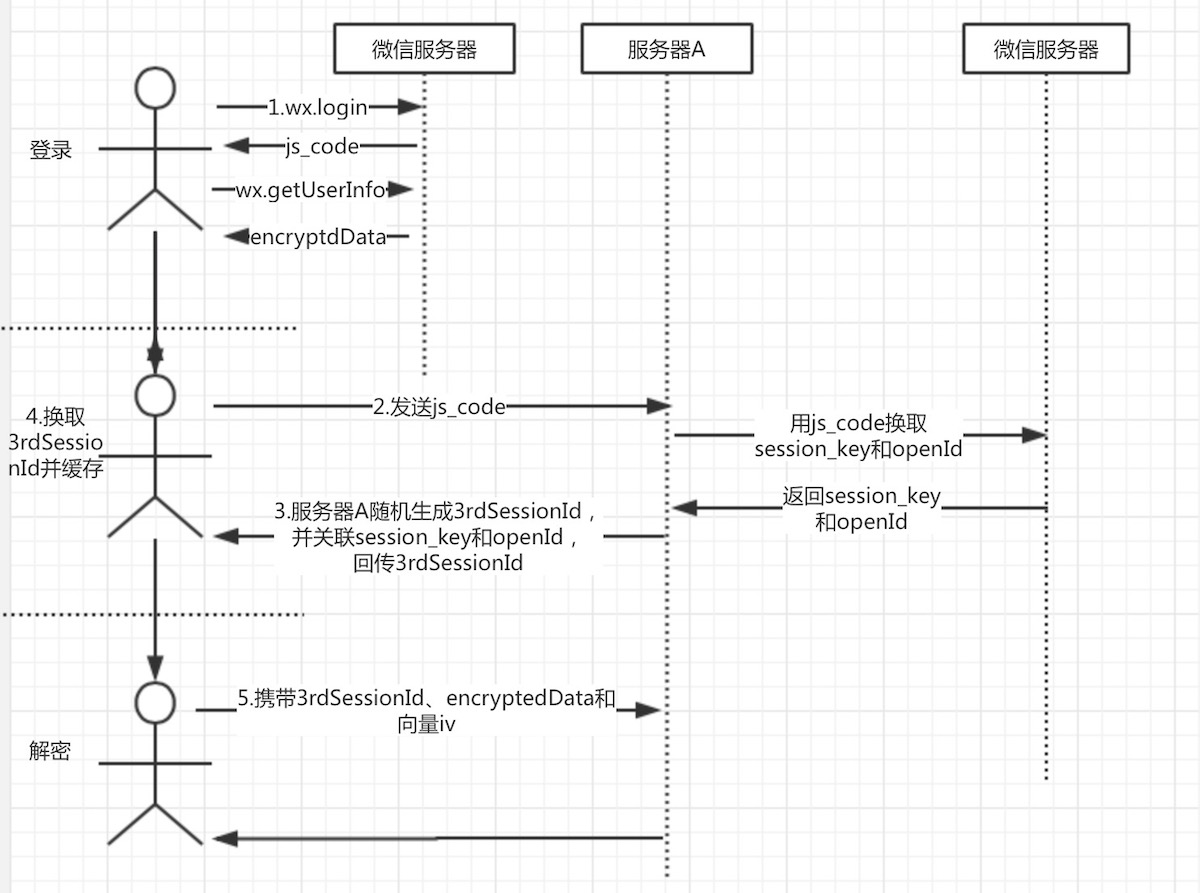
- 小程序客户端调用wx.login,回调里面包含js_code。
- 然后将js_code发送到服务器A(开发者服务器),服务器A向微信服务器发起请求附带js_code、appId、secretkey和grant_type参数,以换取用户的openid和session_key(会话密钥)。
-
服务器A拿到session_key后,生成一个随机数我们叫3rd_session,以3rdSessionId为key,以session_key + openid为value缓存到redis或memcached中;因为微信团队不建议直接将session_key在网络上传输,由开发者自行生成唯一键与session_key关联。其作用是:
- 将3rdSessionId返回给客户端,维护小程序登录态。
- 通过3rdSessionId找到用户session_key和openid。
- 客户端拿到3rdSessionId后缓存到storage,
- 通过wx.getUserIinfo可以获取到用户敏感数据encryptedData 。
- 客户端将encryptedData、3rdSessionId和偏移量一起发送到服务器A
- 服务器A根据3rdSessionId从缓存中获取session_key
- 在服务器A使用AES解密encryptedData,从而实现用户敏感数据解密
重点在6、7、8三个环节。
AES解密三个参数:
- 密文 encryptedData
- 密钥 aesKey
- 偏移向量 iv
服务端解密流程:
- 密文和偏移向量由客户端发送给服务端,对这两个参数在服务端进行Base64_decode解编码操作。
- 根据3rdSessionId从缓存中获取session_key,对session_key进行Base64_decode可以得到aesKey,aes密钥。
- 调用aes解密方法,算法为 AES-128-CBC,数据采用PKCS#7填充。
下面结合小程序实例说明解密流程:
-
微信登录,获取用户信息
var that = this; wx.login({ success: function (res) { //微信js_code that.setData({wxcode: res.code}); //获取用户信息 wx.getUserInfo({ success: function (res) { //获取用户敏感数据密文和偏移向量 that.setData({encryptedData: res.encryptedData}) that.setData({iv: res.iv}) } }) } }) -
使用code换取3rdSessionId
var httpclient = require('../../utils/httpclient.js') VAR that = this //httpclient.req(url, data, method, success, fail) httpclient.req( 'http://localhost:8090/wxappservice/api/v1/wx/getSession', { apiName: 'WX_CODE', code: this.data.wxcode }, 'GET', function(result){ var thirdSessionId = result.data.data.sessionId; that.setData({thirdSessionId: thirdSessionId}) //将thirdSessionId放入小程序缓存 wx.setStorageSync('thirdSessionId', thirdSessionId) }, function(result){ console.log(result) } ); -
发起解密请求
//httpclient.req(url, data, method, success, fail) httpclient.req( 'http://localhost:8090/wxappservice/api/v1/wx/decodeUserInfo', { apiName: 'WX_DECODE_USERINFO', encryptedData: this.data.encryptedData, iv: this.data.iv, sessionId: wx.getStorageSync('thirdSessionId') }, 'GET', function(result){ //解密后的数据 console.log(result.data) }, function(result){ console.log(result) } ); -
服务端解密实现(java)
/** * 解密用户敏感数据 * @param encryptedData 明文 * @param iv 加密算法的初始向量 * @param sessionId 会话ID * @return */ @Api(name = ApiConstant.WX_DECODE_USERINFO) @RequestMapping(value = "/api/v1/wx/decodeUserInfo", method = RequestMethod.GET, produces = "application/json") public Map<String,Object> decodeUserInfo(@RequestParam(required = true,value = "encryptedData")String encryptedData, @RequestParam(required = true,value = "iv")String iv, @RequestParam(required = true,value = "sessionId")String sessionId){ //从缓存中获取session_key Object wxSessionObj = redisUtil.get(sessionId); if(null == wxSessionObj){ return rtnParam(40008, null); } String wxSessionStr = (String)wxSessionObj; String sessionKey = wxSessionStr.split("#")[0]; try { AES aes = new AES(); byte[] resultByte = aes.decrypt(Base64.decodeBase64(encryptedData), Base64.decodeBase64(sessionKey), Base64.decodeBase64(iv)); if(null != resultByte && resultByte.length > 0){ String userInfo = new String(resultByte, "UTF-8"); return rtnParam(0, userInfo); } } catch (InvalidAlgorithmParameterException e) { e.printStackTrace(); } catch (UnsupportedEncodingException e) { e.printStackTrace(); } return rtnParam(50021, null); } -
AES解密核心代码
public byte[] decrypt(byte[] content, byte[] keyByte, byte[] ivByte) throws InvalidAlgorithmParameterException {
    initialize();
    try {
        Cipher cipher = Cipher.getInstance("AES/CBC/PKCS7Padding");
        Key sKeySpec = new SecretKeySpec(keyByte, "AES");

        cipher.init(Cipher.DECRYPT_MODE, sKeySpec, generateIV(ivByte));// 初始化
        byte[] result = cipher.doFinal(content);
        return result;
    } catch (NoSuchAlgorithmException e) {
        e.printStackTrace();
    } catch (NoSuchPaddingException e) {
        e.printStackTrace();
    } catch (InvalidKeyException e) {
        e.printStackTrace();
    } catch (IllegalBlockSizeException e) {
        e.printStackTrace();
    } catch (BadPaddingException e) {
        e.printStackTrace();
    } catch (NoSuchProviderException e) {
        // TODO Auto-generated catch block
        e.printStackTrace();
    } catch (Exception e) {
        // TODO Auto-generated catch block
        e.printStackTrace();
    }


